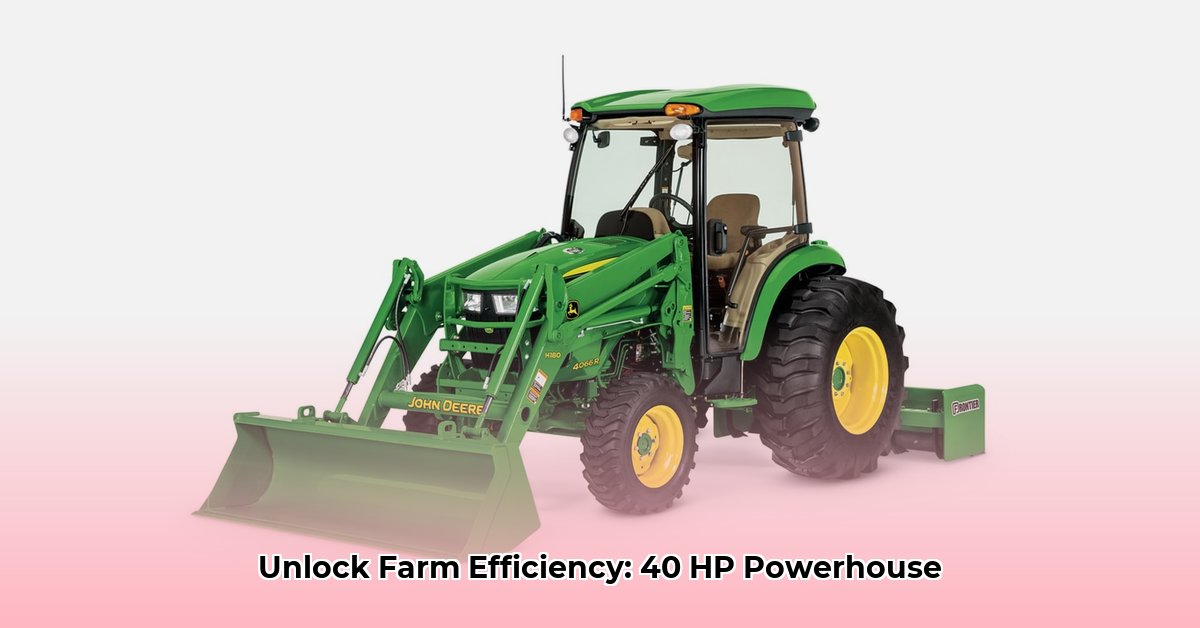
Understanding the John Deere 40 hp Tractor with Loader
The John Deere 40 hp tractor with loader represents a popular choice in the compact tractor market, appealing to farmers and ranchers seeking a balance between power and maneuverability. This article assesses its efficiency and sustainability, focusing on areas where data is readily available while acknowledging the lack of comprehensive manufacturer-provided sustainability metrics. The increasing importance of sustainable agricultural practices necessitates a thorough examination of this popular machine. For more information on older John Deere models, see this helpful resource.
Features and Specifications Relevant to Sustainability
The John Deere 40 hp tractor boasts features designed to enhance efficiency, potentially impacting its overall environmental footprint. The electro-hydraulic hitch, for example, promises increased precision in operations. However, the absence of readily available data from John Deere regarding fuel consumption, greenhouse gas emissions, and a complete lifecycle assessment (LCA) limits a comprehensive sustainability evaluation. Key specifications, such as engine type and hydraulic system details, would be crucial for a deeper analysis, but that data is not presently accessible.
Sustainability Analysis: Bridging the Data Gap
While John Deere highlights features suggesting potential fuel efficiency improvements (like the electro-hydraulic hitch), concrete data supporting these claims remains unavailable. This lack of transparency hinders a complete assessment of the tractor's environmental impact. We can, however, infer potential sustainability benefits based on the potential for precision agriculture, leading to reduced resource waste. However, this is an indirect benefit requiring further investigation and independent verification through rigorous testing and comparative studies. Without a comprehensive LCA, we are left with a partial picture at best. Thus, a definitive sustainability rating for this tractor remains elusive due to insufficient publicly available information.
Comparative Analysis: A Limited Perspective
A direct comparison with competing compact tractor models from other manufacturers is hampered by the inconsistency in publicly available sustainability data. While manufacturers often advertise horsepower and features, detailed fuel efficiency and emissions figures are less frequently available. This data scarcity makes a thorough comparative analysis difficult, highlighting a significant industry-wide need for greater transparency. Any comparison would only be as good as the data from the compared companies.
Cost Analysis: A Holistic Approach to Sustainability
Assessing the total cost of ownership (TCO) offers a more holistic view of sustainability. TCO includes the initial purchase price, fuel consumption, maintenance costs, potential repairs, and anticipated resale value. A lower TCO, resulting from greater fuel efficiency and longevity, directly contributes to the tractor’s sustainability. However, without detailed manufacturer-supplied data on fuel consumption and maintenance requirements, precise TCO calculations are currently impossible. This further underscores the need for greater transparency in the agricultural equipment industry.
Conclusion: A Call for Industry-Wide Change
The assessment of the John Deere 40 hp tractor's sustainability is incomplete due to a critical lack of readily available data from the manufacturer. While features like the electro-hydraulic hitch suggest potential fuel savings and increased operational efficiency, without quantifiable data, we cannot make definitive statements about its environmental impact. This highlights a broader need for increased transparency within the agricultural machinery industry, prompting manufacturers to proactively publish detailed sustainability metrics, enabling informed purchasing decisions by farmers and contributing to the advancement of sustainable agriculture. The industry must embrace more rigorous reporting standards to provide the transparency needed to effectively judge the environmental impact of such equipment.